







• ENGLISH
  • PERSIAN
  • CHINESE
  • RUSSIAN
  • TURKISH
  • ARABIC

Collectors

Collectors

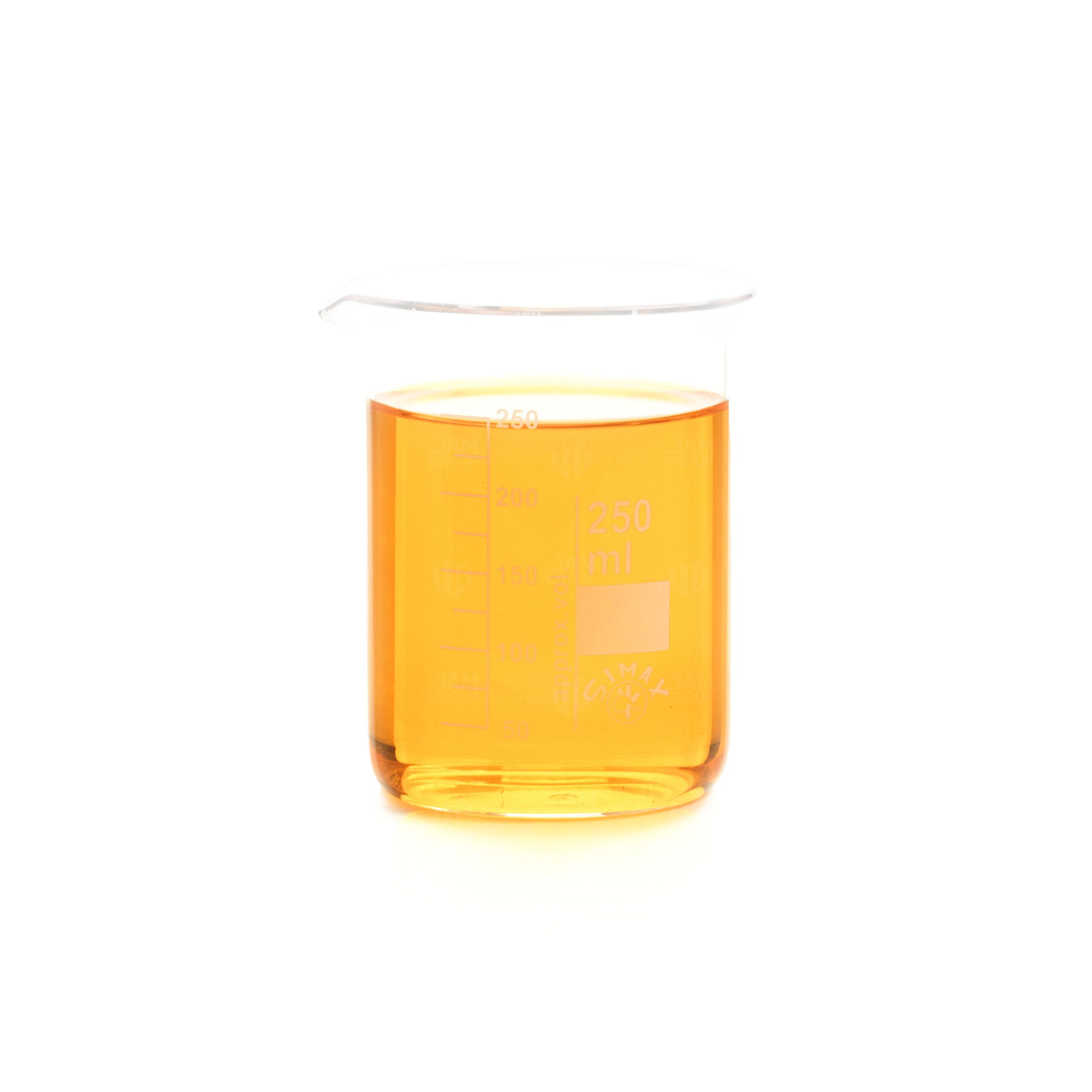
JAMCollector Z-306 is a direct, high-performance substitute for Potassium Amyl Xanthate (PAX), a thiol-type collector that has served sulfide mineral flotation circuits for decades. As mining operations face intensifying regulatory scrutiny, stricter environmental standards, and recurring supply disruptions tied to PAX’s hazardous classification, the industry is actively seeking collector solutions that preserve metallurgical output without the accompanying safety and compliance burden. JAMCollector Z-306 addresses each of these pressure points directly, delivering equivalent collection power across copper, zinc, nickel, lead, and gold sulfide circuits while removing the core risks that PAX introduces.

Switching a core flotation reagent is not a decision most plant metallurgists take lightly. Process stability, concentrate grade, and recovery rates are all at stake, and any disruption carries real operational cost. JAM Holdings Group recognises this concern and structures its JAMCollector Z-306 supply around seamless transition support — from bench-scale testing guidance through to full-circuit integration. With consistent batch quality, export-ready documentation, and technical assistance throughout the changeover process, buyers can evaluate and adopt JAMCollector Z-306 with measurable confidence at every stage.


The Limitations & Risks of Potassium Amyl Xanthate (PAX)

Potassium Amyl Xanthate established itself as one of the most widely used flotation collectors in the global mining industry across the twentieth century. Its strong collecting action on sulfide minerals made it a default choice for copper, zinc, nickel, and gold circuits alike. However, the same chemical properties that give PAX its collecting strength (a reactive sulfur backbone susceptible to acid, heat, and moisture) also make it a persistent liability across environmental, occupational, and logistical dimensions. Modern procurement teams now weigh these risks more carefully, and in many jurisdictions, regulatory change is accelerating that process.

Environmental Impact & Regulatory Pressures

PAX and its primary decomposition product, carbon disulfide (CS2), are classified as highly toxic to aquatic organisms. When PAX enters water systems — through plant effluent, spills, or tailings runoff — it can persist and form complexes with dissolved heavy metals, raising the rate at which those metals accumulate in fish and other aquatic life. Environmental databases currently hold limited xanthate monitoring data, which complicates risk assessment but has also drawn regulatory attention in the European Union, where recent water quality legislation has flagged xanthates and CS2 as substances warranting closer evaluation. Operations in catchment-sensitive locations face growing pressure to demonstrate effluent compliance, and PAX makes that demonstration structurally difficult.

Occupational Health & Safety Hazards

PAX is classified under the Australian Dangerous Goods Code (ADG) and international transport regulations as a spontaneously combustible substance — UN 3342, Class 4.2. It does not require an external ignition source to catch fire; exposure to moisture or elevated temperature is sufficient. In solid form, contact with moist air has triggered ignition in documented storage incidents. When PAX decomposes — whether through heat, acidic pH below 8, or prolonged aging in solution — it releases carbon disulfide, a gas that is simultaneously toxic to the nervous system and extremely flammable. Workers involved in dissolving, dosing, or cleaning PAX equipment face inhalation, skin burn, and explosion risks that require rigorous engineering controls and personal protective equipment at all times.

Economic and Storage Inefficiencies

Beyond safety, PAX introduces substantial procurement and storage complexity. Its stability is sensitive to temperature, humidity, and storage duration — conditions that are difficult to manage consistently across long international supply chains or in tropical mining environments. Real-world incidents linked to xanthate storage include boxes spontaneously combusting, packaged product leaking from degraded containers, and explosive reactions when solid xanthate was inadvertently added to water in an uncontrolled manner. On-site, the solid form must be dissolved before use, creating an additional handling step and a window of elevated exposure. Waste disposal requires licensed hazardous facilities — an ongoing cost that compounds with volume and frequency of use.


JAMCollector Z-306: Properties and Strengths

JAMCollector Z-306 was developed to occupy exactly the operational space that PAX currently holds — but without the hazard profile that burdens its procurement, storage, and disposal. As a liquid-phase collector, it bypasses the spontaneous combustion risk that defines PAX handling. Its broader pH stability eliminates the narrow operating window that makes xanthate solutions so sensitive to circuit fluctuations. For plant metallurgists, the transition means retaining the collecting performance their circuits depend on while removing several categories of operational and regulatory risk that have accumulated around PAX over decades of use.

Key Advantages of JAMCollector Z-306

  • Performance Equivalence:

JAMCollector Z-306 delivers collecting power directly comparable to PAX across the full range of sulfide minerals — chalcopyrite, galena, sphalerite, pentlandite, and auriferous pyrite. It performs in both rougher and scavenger flotation stages, producing metal recovery rates and concentrate grades that align with established PAX benchmarks. No reduction in circuit yield is expected during a correctly managed transition.

  • Cost Efficiency:

The liquid form of JAMCollector Z-306 eliminates the on-site dissolution step required for solid PAX, reducing reagent preparation time and associated labour costs. Its extended shelf life and non-hazardous transport classification lower freight surcharges and insurance premiums tied to dangerous goods shipments, contributing to a more predictable and competitive total procurement cost per tonne of ore processed.

Safety and Handling:

Unlike PAX, JAMCollector Z-306 is not classified as a spontaneously combustible dangerous good. It does not decompose to release carbon disulfide under normal storage or operational conditions, removing the inhalation and fire risk associated with xanthate collectors. This reduces engineering controls, emergency response planning, and personal protective equipment demands placed on site safety teams during routine operations.

Drop-In Readiness:

JAMCollector Z-306 integrates into existing flotation circuits without requiring capital modifications to equipment or infrastructure. Standard liquid dosing pumps already installed at most mineral processing plants are fully compatible. The transition requires dosage calibration during initial bench testing, but the circuit configuration, conditioning approach, and frother pairings used with PAX can be carried forward unchanged.


The Mechanics of JAMCollector Z-306

Froth flotation (the process in which JAMCollector Z-306 operates) separates valuable minerals from waste rock by exploiting differences in surface chemistry. A collector is introduced into the ore slurry and selectively coats target mineral particles, making them water-repellent. When air is pumped through the flotation cell, these coated particles attach to rising bubbles and accumulate in the froth layer at the top of the cell, where they are skimmed off as mineral concentrate. JAMCollector Z-306 executes this mechanism with the same functional precision as PAX, while operating with a more stable and manageable chemical profile throughout the circuit.

The Role of JAMCollector Z-306 in Froth Flotation

In a flotation cell, the collector must adsorb firmly onto the surface of the target mineral and hold its position under the mechanical agitation of the impeller. JAMCollector Z-306 bonds to sulfide mineral surfaces through chemisorption — a chemical interaction between the product’s sulfur-bearing functional group and the metal ions exposed at the mineral surface. This forms a stable, hydrophobic monolayer that persists through agitation and enables the coated mineral particle to attach to an air bubble rising through the pulp. The bubble-particle aggregate travels upward to the froth zone, where it accumulates and is mechanically skimmed off as mineral concentrate. Gangue minerals — silicates, carbonates, and other non-target species — remain hydrophilic, settle toward the base of the cell, and exit the circuit as tailings. This sequence mirrors the mechanism of PAX at the point of collector action, making JAMCollector Z-306 a functionally equivalent replacement that requires no change to flotation cell design, impeller configuration, or froth management practice.

Maintaining Efficiency Across Key Variables

Several operational variables directly affect collector performance, and plant metallurgists track them closely during any reagent evaluation. Pulp pH is the most consequential: PAX performs within a narrow window centred near pH 10 and degrades rapidly if conditions fall below pH 8 or exceed pH 13. JAMCollector Z-306 operates across a broader pH range, reducing process sensitivity to fluctuations in lime addition or the natural buffering capacity of the ore. Dosage rate is established during bench testing and refined through the pilot trial; the liquid format of Z-306 allows precise metered delivery through standard peristaltic or diaphragm pumps already installed in most circuits.

Conditioning time — the period during which the collector contacts ore particles before air introduction — follows the same protocols as PAX without modification. Because Z-306 does not decompose to carbon disulfide under operational temperatures or normal storage durations, aged solutions retain their collecting activity throughout the shift. This removes the time-pressure on solution preparation that solid xanthate dissolution imposes and supports more consistent reagent delivery to the conditioning stage across all operating shifts.


Applications of JAMCollector Z-306

JAMCollector Z-306 targets the same processing circuits, ore types, and industrial contexts as PAX. Its design maps directly onto the mineral suites and flotation regimes where PAX has been the standard collector of choice. This means mine sites and processing plants currently running PAX-based circuits — whether for base metals, precious metals, or polymetallic concentrates — can evaluate JAMCollector Z-306 as a direct replacement without altering their process targets, circuit layout, or downstream smelting or refining specifications. The sections below outline its application across the core industry segments where PAX has historically performed.

Application in Copper and Polymetallic Ore Processing

Copper sulfide ores (dominated by chalcopyrite (CuFeS2)) represent the single largest application segment for PAX globally. JAMCollector Z-306 performs in the same rougher and scavenger positions within copper flotation circuits, coating chalcopyrite surfaces to promote bubble attachment and concentrate formation. In copper-nickel and copper-lead-zinc polymetallic operations, where multiple target sulfides are recovered in bulk before differential separation, Z-306 provides the broad collecting action required across all target species. Its stable liquid format reduces the risk of inconsistent dosing that can occur when solid PAX is not fully dissolved before delivery to the conditioning tank, supporting more reliable recovery across variable feed grades and ore hardness ranges encountered at most operating mines.

Application in Gold Ore Processing

Gold associated with iron sulfide minerals (principally pyrite and arsenopyrite) is recovered by floating the host sulfide rather than the gold particle itself. PAX is widely applied for this purpose, rendering gold-bearing pyrite particles hydrophobic so they report to the sulfide concentrate, which then undergoes cyanidation or pressure oxidation. JAMCollector Z-306 applies to the same gold flotation circuit, targeting auriferous pyrite with equivalent surface activity and comparable dosage efficiency. In operations combining flotation with downstream cyanide leaching, the elimination of carbon disulfide generation during collector use provides an additional process safety advantage over PAX — particularly relevant where multiple reactive reagents are handled concurrently on the same plant site and inhalation risk must be minimised.

Application in Lead, Zinc, and Nickel Processing

Lead and zinc ores typically contain galena (PbS) and sphalerite (ZnS), two minerals that require differential flotation to produce commercially separate concentrates. PAX is applied in the lead rougher circuit before zinc activation and collection. JAMCollector Z-306 occupies the same position in that sequence, collecting galena effectively at the circuit’s natural operating pH without requiring excessive lime for pyrite depression. For nickel operations targeting pentlandite in increasingly low-grade and mineralogically complex ore bodies, Z-306’s collecting efficiency at controlled dosage rates supports the improved mineral selectivity that declining feed grades demand. This translates to reduced reagent consumption per unit of recovered nickel and supports concentrate grade targets in operations processing variable ores.

Application in Complex Polymetallic and Specialty Metal Circuits

Polymetallic ore bodies — those containing commercially recoverable quantities of three or more metals simultaneously — present some of the most complex flotation challenges in mineral processing. These circuits often run mixed collector regimes, pairing a primary xanthate with secondary collectors such as dithiophosphates or thionocarbamates to improve selectivity. JAMCollector Z-306 is compatible with these blended collector approaches. It can serve as the primary collector in a mixed regime, replacing PAX in that role while the secondary collectors continue unchanged. This flexibility makes it applicable across molybdenum, cobalt, bismuth, and platinum group metal circuits where PAX has historically contributed to bulk sulfide recovery.


Step-by-Step Transition & Bench Testing Protocol for JAMCollector Z-306

Replacing a primary flotation collector requires a structured, phased approach. A change made directly at full plant scale — without prior bench testing or controlled piloting — carries an unacceptable risk of metallurgical loss and process instability. The protocol below outlines a three-phase transition framework that moves from laboratory confirmation through to full plant integration in a controlled, data-driven sequence. Each phase produces documented results that inform the next, giving plant metallurgists and management the evidence base needed to proceed with confidence at each step of the changeover.

Phase 1: Laboratory Bench-Scale Testing

Begin by establishing a clear performance baseline for the current PAX regime. Document the existing dosage rate in grams per tonne of ore, the solution concentration used, dosing point locations, conditioning time, operating pH, and current metal recovery and concentrate grade figures. Then run bench flotation tests using representative ore samples from the active feed source. Test JAMCollector Z-306 starting at the PAX-equivalent dosage and adjust upward and downward in systematic increments. Each condition should be run in triplicate to confirm reproducibility. Measure recovery percentage, concentrate grade, mass pull, and froth characteristics — volume, stability, and visual quality — at each dosage point. The goal is to identify the Z-306 dosage that matches or improves on the PAX baseline before moving to plant-scale testing.

Phase 2: Pilot Plant Trials

Once bench results confirm equivalent or better performance, scale the test to a single flotation bank or a defined section of the circuit — typically the rougher bank. Keep the remainder of the circuit on PAX during the trial so that any variation can be isolated to the Z-306 bank. Run the pilot circuit continuously for a minimum of one complete shift to allow steady-state conditions to develop. Monitor tailings grade, concentrate grade, and mass pull hourly. Compare these figures against the pre-trial baseline recorded in Phase 1. Froth behaviour and pump wear should also be noted. If performance is within acceptable variance, extend the trial to cover multiple ore feed types or blends if the plant processes variable ore bodies.

Phase 3: Full-Scale Plant Integration

With pilot data confirming stable performance across the target circuit bank, the full plant transition can proceed. Begin by switching all rougher banks to JAMCollector Z-306 first, then extend to scavenger and cleaner circuits in sequence. Calibrate liquid dosing pumps to deliver the confirmed Z-306 dosage rate. In the first week of full-circuit operation, maintain sampling frequency at hourly intervals for tailings and concentrate streams. Adjust reagent feed rates incrementally if performance deviates from the pilot baseline. After the first two weeks of stable full-scale operation, sampling intervals can return to the plant’s standard schedule. Complete the PAX inventory drawdown in parallel to avoid maintaining two active collector stockpiles during the transition period.


Safe Handling & Storage of JAMCollector Z-306

JAMCollector Z-306 arrives in liquid form and does not carry the spontaneous combustion classification that governs PAX storage. It does not require segregated dangerous goods storage areas or the temperature-controlled conditions needed to slow xanthate degradation. Standard bulk liquid chemical storage applies: a bunded tank or drum store in a covered, ventilated area, away from incompatible materials such as strong oxidisers, and protected from direct sunlight and extreme heat. The product should be kept within the storage temperature range specified on its Safety Data Sheet (SDS). Containers must be kept sealed when not in use to prevent contamination and maintain product integrity over the storage period.

Although JAMCollector Z-306 presents a substantially lower hazard profile than PAX, standard chemical handling precautions remain in effect during daily use. Operators should wear chemical-resistant gloves and safety goggles when connecting dosing lines, performing pump maintenance, or managing spills. In the event of a spill, absorb the material with an inert medium such as dry sand or vermiculite, collect into a labelled container, and dispose of in accordance with applicable local environmental regulations. Do not allow the product to enter drains or watercourses. The product’s SDS should be accessible at the point of use, and all site personnel involved in its handling should receive appropriate induction training before first use.


Global Market Trends in Mining Flotation Chemicals

The shift toward safer and more stable flotation collector chemistry is not a niche development — it is a measurable structural trend running through the entire mining chemicals sector. Regulatory pressure, ESG reporting obligations, and insurer-driven risk reduction are converging to make the continued use of hazardous solid xanthates operationally expensive in ways that extend well beyond the reagent price itself. JAMCollector Z-306 enters this market at a point where buyer readiness for collector substitution is higher than at any previous time, supported by growing commercial availability of verified alternatives and accumulating plant trial data from operations that have already made the switch.

Market Shift Analysis

The global mining flotation chemicals market was valued at approximately USD 12 billion in 2024 and is projected to reach close to USD 20 billion by 2034, growing at a compound annual growth rate above 5 percent. Collectors — the segment directly relevant to JAMCollector Z-306 — account for roughly 38 to 39 percent of total flotation chemical demand, and sulfide ore applications represent approximately 61 to 65 percent of all flotation reagent consumption globally. Asia-Pacific holds the largest regional share at around 38 to 45 percent of total demand, driven by large-scale copper, nickel, and gold operations across China, Australia, Indonesia, and India.

Within the collector segment, the trend toward lower-hazard formulations is measurable: more than 39 percent of new collector products launched in 2023 were formulated to be biodegradable or reduced in toxicity. ESG compliance reporting and stricter environmental discharge standards are accelerating procurement decisions toward products with cleaner handling profiles, meaning the market tailwind behind JAMCollector Z-306 is structural rather than cyclical.


JAM Holdings Group Supply Capability & Export Readiness

JAM Holdings Group operates as a dedicated industrial chemical supplier with an established track record in mining reagent supply, quality assurance, and international export logistics. For buyers evaluating a transition away from PAX, the commercial risk of changing a core process chemical is just as important as the technical risk. JAM Holdings Group structures its JAMCollector Z-306 supply to address both dimensions — providing consistent product quality, verifiable documentation, and the export readiness needed to maintain supply continuity across global mining markets without operational disruption.

About JAM Holdings Group’s JAMCollector Z-306

As a committed supplier of JAMCollector Z-306, JAM Holdings Group manages quality control across the full supply chain from sourcing through to dispatch. Each batch of JAMCollector Z-306 is accompanied by a Certificate of Analysis (COA) confirming the product’s composition and key parameters, along with a Safety Data Sheet (SDS) appropriate to the applicable jurisdiction. Batch coding provides full traceability from the point of manufacture to the point of delivery, allowing buyers to cross-reference shipment records against laboratory documentation for each consignment received.

JAM Holdings Group as a Reliable Supplier of JAMCollector Z-306

As an established exporter of JAMCollector Z-306, JAM Group maintains the export documentation infrastructure required for compliant international chemical trade. Pre-shipment inspection by independent third-party agencies — including SGS and Bureau Veritas — is available to buyers who require verification of product quantity and specification prior to loading. Standard export documentation for each shipment includes a Commercial Invoice, Packing List, Bill of Lading, Certificate of Analysis, and Safety Data Sheet. The company has an active export track record across multiple regions and maintains lead-time discipline to support buyers operating on planned reagent procurement schedules.

Sourcing & Facilities / Provenance for JAMCollector Z-306

As a trusted provider of JAMCollector Z-306, JAM Holdings Group sources through a qualified partner production network that meets the consistency and purity requirements of mineral processing applications. Provenance is procurement-relevant: a stable, established production base reduces the supply disruption risk that has periodically affected xanthate procurement due to hazardous goods transport restrictions and manufacturing concentration. Buyers can request origin documentation as part of their standard supplier qualification process, and JAM Group supports that review with transparent supply chain information.

Packaging & Logistics of JAMCollector Z-306 at JAM Holdings Group

JAMCollector Z-306 is supplied in packaging formats suited to both sampling and bulk procurement requirements. Standard configurations include 25-litre drums, 200-litre drums, and intermediate bulk containers (IBCs) for larger volume orders. All containers are clearly labelled with batch number, net and gross weight, production date, and applicable hazard identification where required. Pallets are stretch-wrapped for container shipment stability. Because JAMCollector Z-306 is not classified as a spontaneously combustible dangerous good, it does not require the specialised transport conditions mandated for PAX shipments, allowing standard container booking and freight arrangements to apply.

HOW CAN JAM GROUP HELP YOU?

Send us a message and our friendly team will get back to you within one business day.