



















JAM Group Co. is a reliable international sodium sulfite supplier and provider for buyers seeking a sodium sulfite industrial chemical for their processes. Choosing sodium sulfite involves considering its grade, purity, and physical form in relation to the intended process. These priorities matter when selecting sodium sulfite for pulp and paper production, water treatment, or textile processing. For buyers comparing a sodium sulphite supplier, product suitability should guide purchasing decisions alongside sodium sulfite price. JAM Group Co. provides a supplier option for those evaluating sodium sulfite against their application requirements.
Removing dissolved oxygen from process water helps limit corrosion, making sodium sulfite useful as a water treatment chemical. Sodium sulfite, also known as sodium sulphite, is a white, water-soluble inorganic substance with the chemical formula Na2SO3. Available in different grades and forms with varying purity and properties, it is mainly employed in the pulp and paper sector. Its applications include oxygen scavenging, use as a sodium sulfite reducing agent in textile processing, and use as a sulfonation reagent. This article explains useful information about sodium sulfite’s physical and chemical properties, production processes, grades, industrial applications, and packaging to help readers understand the product and assess its suitability.
What Is Sodium Sulfite?
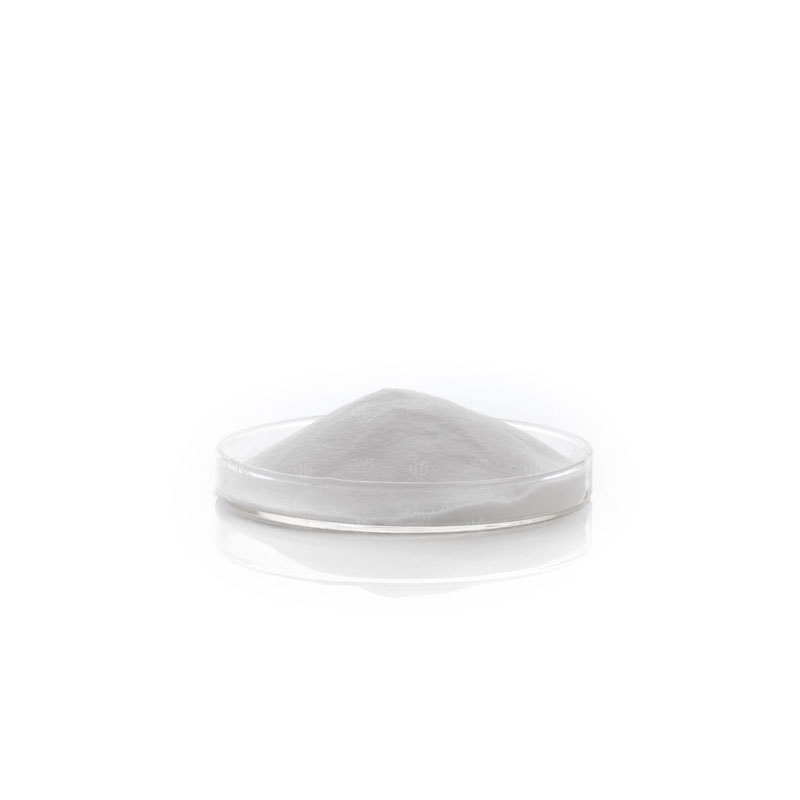
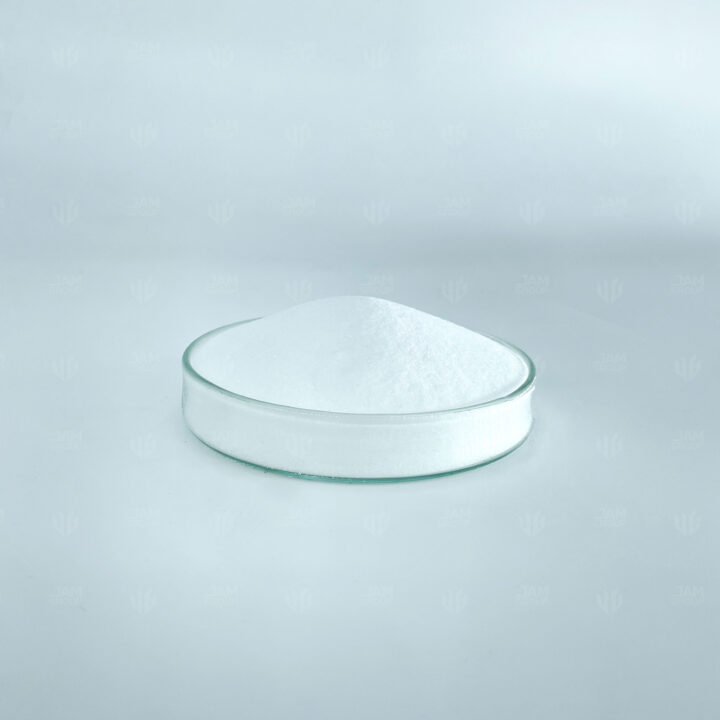
Sodium Sulfite is the inorganic compound and a white odorless crystal or powder with sulfurous salty taste it decompress when heated, moreover it sinks in water and dissolves slowly and also transported as a heptahydrate Na2SO3.7H2O. It is generally available in powder, crystalline, and tablet forms
Physical Properties of Sodium Sulfite
Formula: Na2SO3
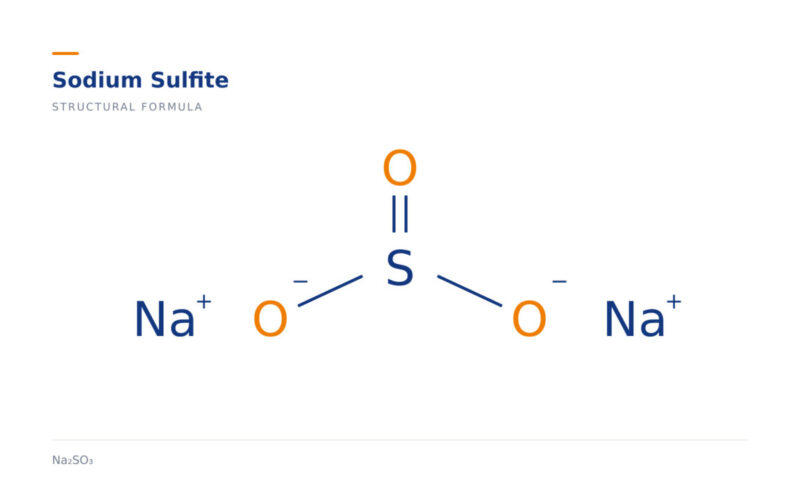
- Molar mass: 126.043 g/mol
- IUPAC ID: Sodium sulfite
- Density: 2.63 g/cm³
- The heptahydrate form density: 1.561 g/cm3.
When heated to 306.5K (33.4oC), the heptahydrate undergoes dehydration. The anhydrous form melts at a temperature of 500o Sodium sulfite does not have a specific boiling point since it tends to decompose at high temperatures. It is moderately soluble in water; its solubility corresponds to 27g/100mL. The crystal structure of anhydrous Na2SO3 is hexagonal whereas the heptahydrate crystals have a monoclinic structure Ph. 8.00-10.0
Chemical Safety

Chemical Properties of Sodium Sulfite
When sodium sulfite contacts with strong or weak acids, Na2SO3 undergoes decomposition, liberating gaseous sulfur dioxide. Sodium sulfite reacts with aldehydes to yield a bisulfite adduct. although, sulfonic acids are produced from its reaction with ketones. Solutions of sodium sulfite are oxidized by atmospheric oxygen, yielding sodium sulfate. Sodium sulfite is not soluble in ammonia and chlorine.
Sodium Sulfite Production Process
A sodium sulfite manufacturer can prepare sodium sulfite by treating a solution of sodium hydroxide with sulfur dioxide. When conducted in warm water, Na2SO3 initially precipitates as a yellow solid. With more SO2, the solid dissolves to give the disulfite, which crystallizes by cooling.
Sodium Sulfite Preparation
- In laboratories, sodium sulfite is generally prepared from the reaction between gaseous sulfur dioxide (SO2) and sodium hydroxide (NaOH). The chemical equation for this reaction is given by:
SO2 + 2NaOH → Na2SO3 + H2O
The depletion of the NaOH reactant can be detected via the addition of a few drops of concentrated H2SO4, concluding in the liberation of SO2 gas. - Industrially, Na2SO3 is produced from the reaction between sulfur dioxide and sodium carbonate solution. At first, sodium bisulfite (NaHSO3) is formed. This compound now reacts with sodium carbonate or sodium hydroxide to yield the sodium sulfite product. The reaction can be generalized to:
Na2CO3 + SO2 → Na2SO3 + CO2
Different Grades of Sodium Sulfite
Various items, including pharmaceuticals, medical devices, biologics, cell- and tissue-based products, and many other healthcare-related solutions, are manufactured and tested using chemicals and reagents, such as sodium sulfite. Laboratories, businesses, and researchers who utilize chemicals and reagents have confidence that their producers have accurately categorized each chemical’s grade and verified that it complies with all applicable legal requirements for its intended use.
Everyone involved in the custodial supply chain must know the various chemical qualities and their purposes.
Like other chemical compounds, sodium sulfite is produced under various grades, each suitable for a particular purpose. A sodium sulfite manufacturer usually presents this product in multiple grades, such as reagent, technical, and Food Chemical Codex. These products contain different amounts of purity, a consideration when comparing sodium sulfite price. It is helpful to know that available sodium sulfite in the market contains 90-98% of Na2SO3.
Applications of Sodium sulfite
Sodium sulfite for mineral processing is mainly regarded as one of the Mineral Processing Chemicals. It is also used in photography, the bleaching of wool, and as preservatives in foods, beverages, and medications. it acts as useful antioxidant compounds and is also used as a sodium sulfite paper chemical in the manufacture of pulp for paper and wood products. Its preservative specifications include controlling microbial growth and the prevention of browning and spoilage.
Sodium sulfite application is as a sulfonation and sulfomethylation agent in the chemical manufacturing industry Sodium sulfite is primarily used as a food preservative (e.g., to prevent dried fruit from discoloring) and as an antioxidant. In the past, sodium sulfite was used to make pulp in the paper industry Sodium sulfite is also used water treatment and photography, Oil recovery, food preservatives, and coloring.
Sodium Sulfite for Paper Industry Applications
Most sodium sulfite, 54%, is consumed in the pulp and paper industry for semi chemical and acid sulfite pulping. The Kraft process ( sulfate process) is a process for conversion of wood into wood pulp, which consists of almost pure cellulose fibers, the main component of paper. The Kraft process entails treatment of wood chips with a hot mixture of water, sodium hydroxide (NaOH), and sodium sulfide (Na2S), , that breaks the bonds that link lignin, hemicellulose, and cellulose. The technology entails several steps, both mechanical and chemical. It is the dominant method for producing paper.
In Food Preservation
Sodium sulfite is often used to prevent the discoloration of dried fruits because it can act as a preservative.
sodium sulfite, is used as preservatives in processed fruit products including dried fruits and juices, it is effective antioxidants that slow browning reactions and improve ascorbic acid retention in certain fruit products, It is used in the juice and juice beverage industry to inhibit malolactic bacteria, acetic acid bacteria, and spoilage yeasts and molds sodium sulfite demonstrates optimal antimicrobial effects below pH = 4 which recommend its use in high acid food systems such as fruit juices.
Sodium Sulfite for Wastewater Treatment
One of the largest use of sodium sulfite is in water and wastewater treatment plants, where its application is to react with and neutralize excess chlorine used in the water and wastewater treatment processes.
In Photography
it is used in the developing process, and it acts as a preservative for the final picture produced.
In Swimming Pools
Sodium sulfite another application is in swimming pools to decrease the chlorine levels in the water.
Sodium Sulfite for Water Treatment as an Oxygen Scavenger
The purpose of an oxygen scavenger is to limit the amount of oxygen available for deteriorative reactions that can lead to reduced functionality of many types of products, from pharmaceuticals to metals, to food This product is used in steam boiler water treatment to remove dissolved oxygen and to remove excess chlorine from wastewater. In boiler systems, this compound works as an oxygen scavenger to protect the system from pitting corrosion.
so the water fed to boilers is often treated with sodium sulfite.
Sodium Sulfite for Textile Industry Applications
The textile industry makes extensive use of Na2SO3 as a sodium sulfite textile chemical for bleaching, dechlorinating and desulfurizing purposes.
In Purifying Trinitrotoluene
Sodium Sulfite is also used in the process of purifying trinitrotoluene (TNT) in order to make it fit for military use.
In Pharmacology
It is a useful agent in many drugs, which helps maintain their potency and stability.
About JAM Group Co.’s Sodium Sulfite
JAM Group Co. is a reliable international sodium sulfite supplier and Na2SO3 chemical supplier for buyers assessing this chemical for industrial use. Beyond its chemical name, purchasing decisions should account for the required grade and the intended application. A material selected for pulp and paper production may be evaluated against different requirements from one intended for water treatment or textile processing. Buyers comparing a sodium sulfite chemical supplier or sodium sulfite exporter should therefore define their requirements before placing an order. This helps keep discussions with JAM Group Co. focused on product suitability, including the required composition and form, without assuming that all sodium sulfite grades are interchangeable.
JAM Group Co. As a Reliable Sodium Sulfite Supplier
A reliable supplier relationship begins with a clear understanding of the buyer’s requirements. When considering JAM Group Co. as a sodium sulphite supplier, industrial buyers should identify the specification they need and the information required to assess a proposed purchase. Relevant questions concern assay, moisture content, physical form, and the conditions under which the material will be stored and used. Comparing sodium sulfite price also requires a consistent basis: products with different grades or specifications may not be directly comparable. These considerations give buyers a practical framework for evaluating JAM Group Co. as a sodium sulfite industrial supplier and Na2SO3 supplier.
| Property | Specification | Test Method |
| Chemical Type | Inorganic sulfite; sodium sulfite (Na₂SO₃) crystalline powder/granular; anhydrous or heptahydrate | – |
| Appearance | White, free‑flowing crystals or powder; free of visible foreign matter | Visual inspection |
| Whiteness (index) | ≥ 85 (report method) | ASTM E313 / ISO 11475 |
| Assay (as Na₂SO₃, w/w) | ≥ 96.0-98.0 % (anhydrous basis; declare basis) | Iodometric titration / ICP‑OES |
| Moisture (w/w) | ≤ 0.50 % (anhydrous grade) | 105 °C oven (ISO 787‑2) |
| Sodium Sulfate (Na₂SO₄) | ≤ 1.0-3.0 wt% | Ion chromatography (IC) |
| Sodium Thiosulfate (Na₂S₂O₃) | ≤ 0.1-0.5 wt% | Iodometric / IC |
| Chloride (Cl⁻) | ≤ 0.05-0.20 wt% | Ion chromatography (IC) |
| Insoluble Matter | ≤ 0.05 wt% | Filtration / gravimetric |
| pH @25 °C (5-10% solution) | 8.5-10.5 | ISO 10523 |
| Density @25 °C | True density 2.6-2.7 g/cm³; bulk (loose) 0.80-1.20 g/cm³ | ISO 12154 / ASTM D1895 |
| Iron (Fe) | ≤ 10-50 mg/kg | ICP‑OES / ICP‑MS |
| Shelf Life | 24 months in dry, sealed packaging | Retain re‑test (assay / pH / insolubles) |
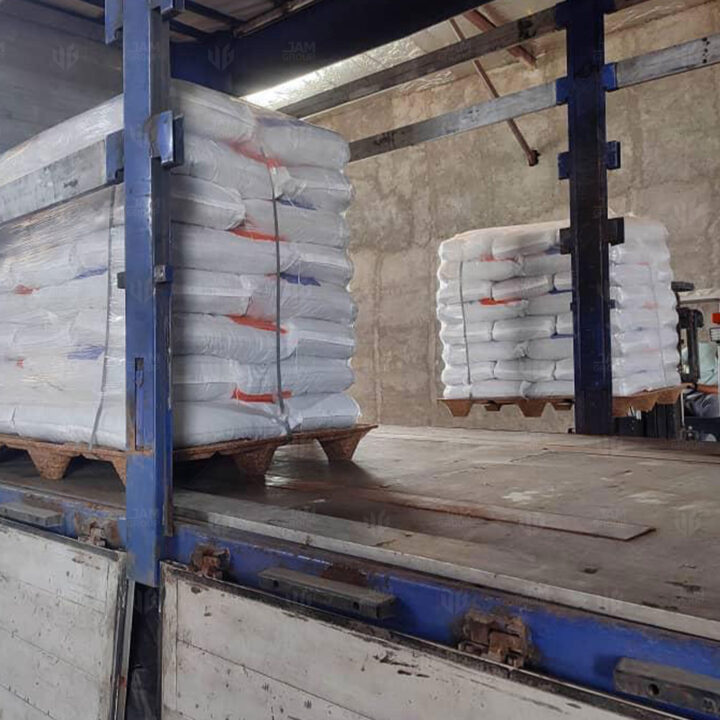
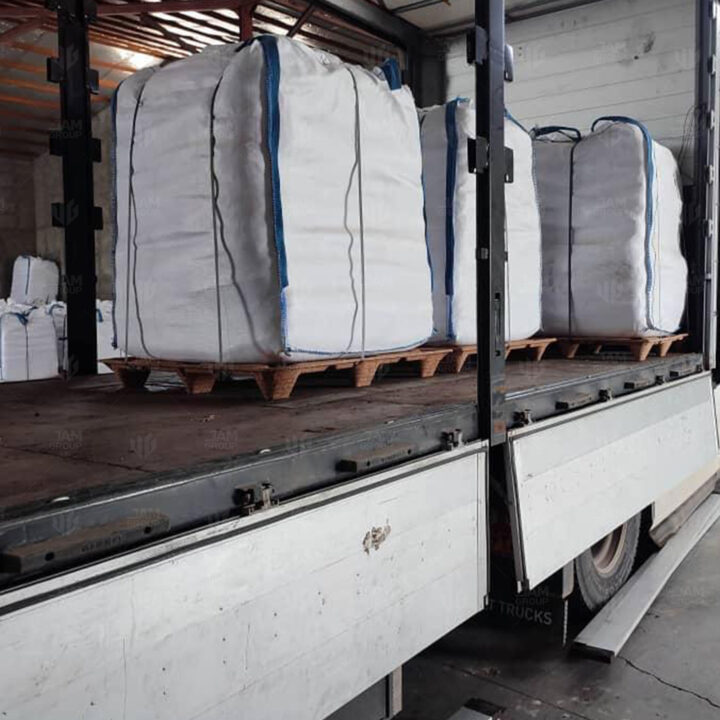
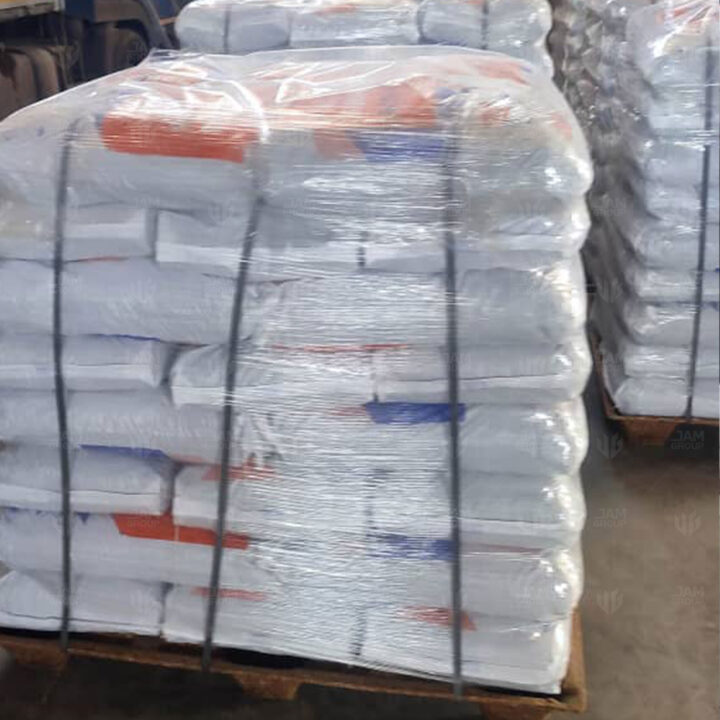
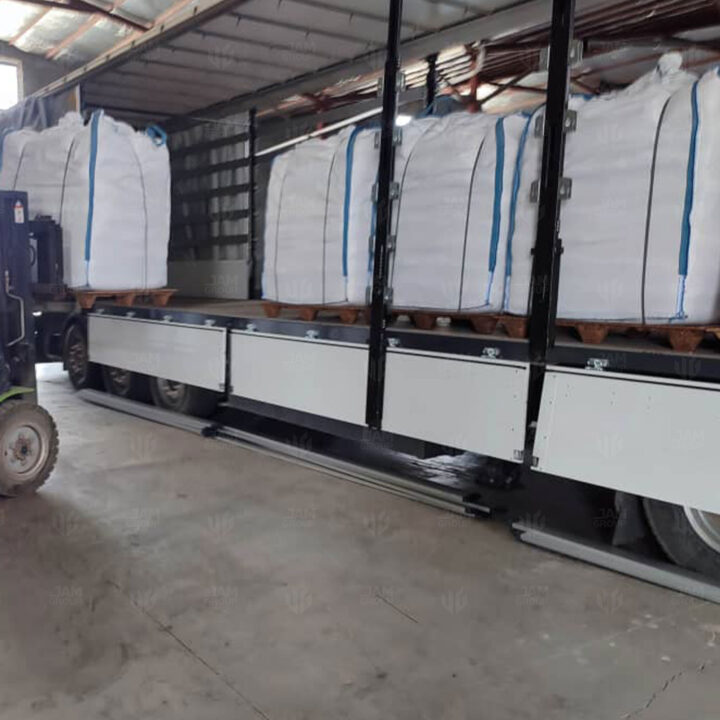
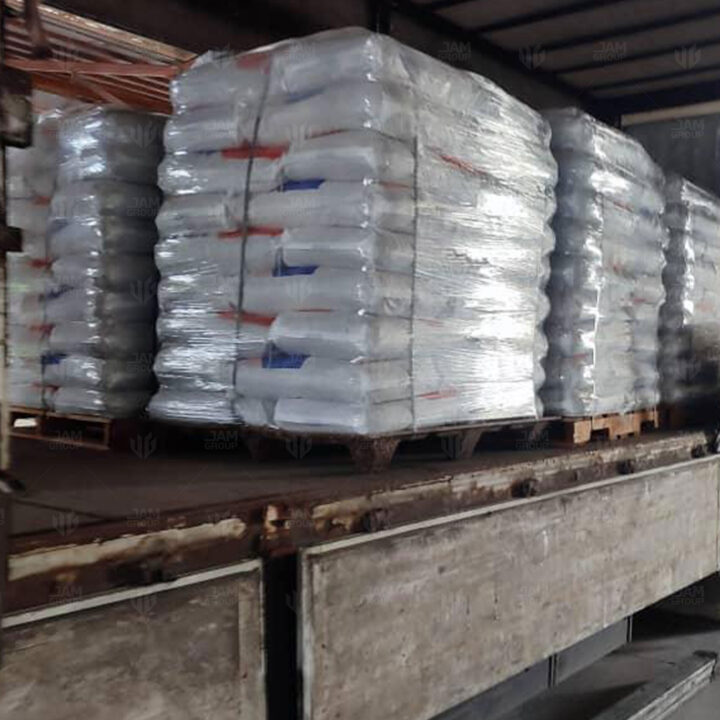
| Packing | 25 kg bags; 500-1,000 kg jumbo bags; palletized | – |
| Storage | Cool, dry, well‑ventilated; keep sealed; protect from moisture/CO₂; segregate from acids/oxidizers | – |
Packaging Sodium Sulfite At JAM Group Co.
Packaging helps protect sodium sulfite from moisture, air exposure, and contamination while supporting safe handling during storage and transit. Buyers should consider how a package will be moved, opened, and stored, as well as whether its closure can protect material that is not used immediately. When evaluating JAM Group Co. as a reliable sodium sulfite supplier, buyers should consider packaging alongside the product specification. The appropriate format depends on the quantity required and the conditions at the receiving facility. Buyers comparing a sodium sulphite exporter should confirm packaging details for their order rather than assume that every format suits every application.
- Bulk packaging formats: Bags and larger bulk containers are relevant options for industrial quantities. Buyers selecting a sodium sulphite supplier should account for powder containment, lifting equipment, dispensing needs, and protection during storage.
- Preservation and sealing: Secure closures help limit moisture ingress, air exposure, and contamination. General storage practice includes keeping containers closed in dry conditions and separating sodium sulfite from acids and oxidizers.
- Retail-ready and private-label formats: These formats have limited relevance to bulk industrial purchases. Buyers requiring smaller packs should clarify pack size, chemical identification, and labeling requirements; private-label availability requires confirmation.
- Palletization and export handling: Buyers evaluating a sodium sulfite exporter should consider stable stacking, protection against punctures and wet conditions, and securing the load against movement. Package dimensions and receiving-site handling equipment should inform load planning.
○What is sodium sulfite and what are its common forms?


Sodium sulfite is an inorganic salt with the formula Na₂SO₃. It’s a white, odorless powder with a salty, sulfurous taste. It’s commonly available in an anhydrous (dry) form but is often transported and used as a heptahydrate (Na₂SO₃·7H₂O), which is a crystalline solid containing seven water molecules.
○What are the key physical properties of sodium sulfite?
The anhydrous form of sodium sulfite has a density of 2.63 g/cm³ and a hexagonal crystal structure. The heptahydrate form is less dense and has a monoclinic structure. Sodium sulfite is moderately soluble in water but decomposes at high temperatures instead of boiling, making it useful in specific thermal processes.
○What happens when sodium sulfite is exposed to acids or air?
When sodium sulfite comes into contact with acids, even weak ones, it decomposes and liberates sulfur dioxide gas. In solution, it’s also slowly oxidized by atmospheric oxygen, which converts it into sodium sulfate. This reactivity is a key consideration for its storage and use in various chemical applications.
○How does sodium sulfite react with aldehydes and ketones?
Sodium sulfite exhibits distinct reactions with different organic compounds. It reacts with aldehydes to form a bisulfite adduct, a common reaction in organic synthesis and purification. With ketones, however, it follows a different pathway, reacting to produce sulfonic acids, demonstrating its versatility as a chemical reagent.
○In what forms does JAM Group Co. supply sodium sulfite?
JAM Group Co. provides sodium sulfite in several forms to meet diverse industrial needs, including powder, crystalline, and tablet formats. We supply both the anhydrous and the stable heptahydrate (Na₂SO₃·7H₂O) versions, ensuring our clients receive the appropriate grade and form for their specific application.
○How does JAM Group Co. recommend storing sodium sulfite?
To prevent oxidation to sodium sulfate and decomposition from ambient moisture or acids, JAM Group Co. recommends storing sodium sulfite in tightly sealed containers in a cool, dry place. Proper storage is crucial to maintain the product’s purity and prevent the unintended release of sulfur dioxide gas.
HOW CAN JAM GROUP HELP YOU?
Send us a message and our friendly team will get back to you within one business day.


