







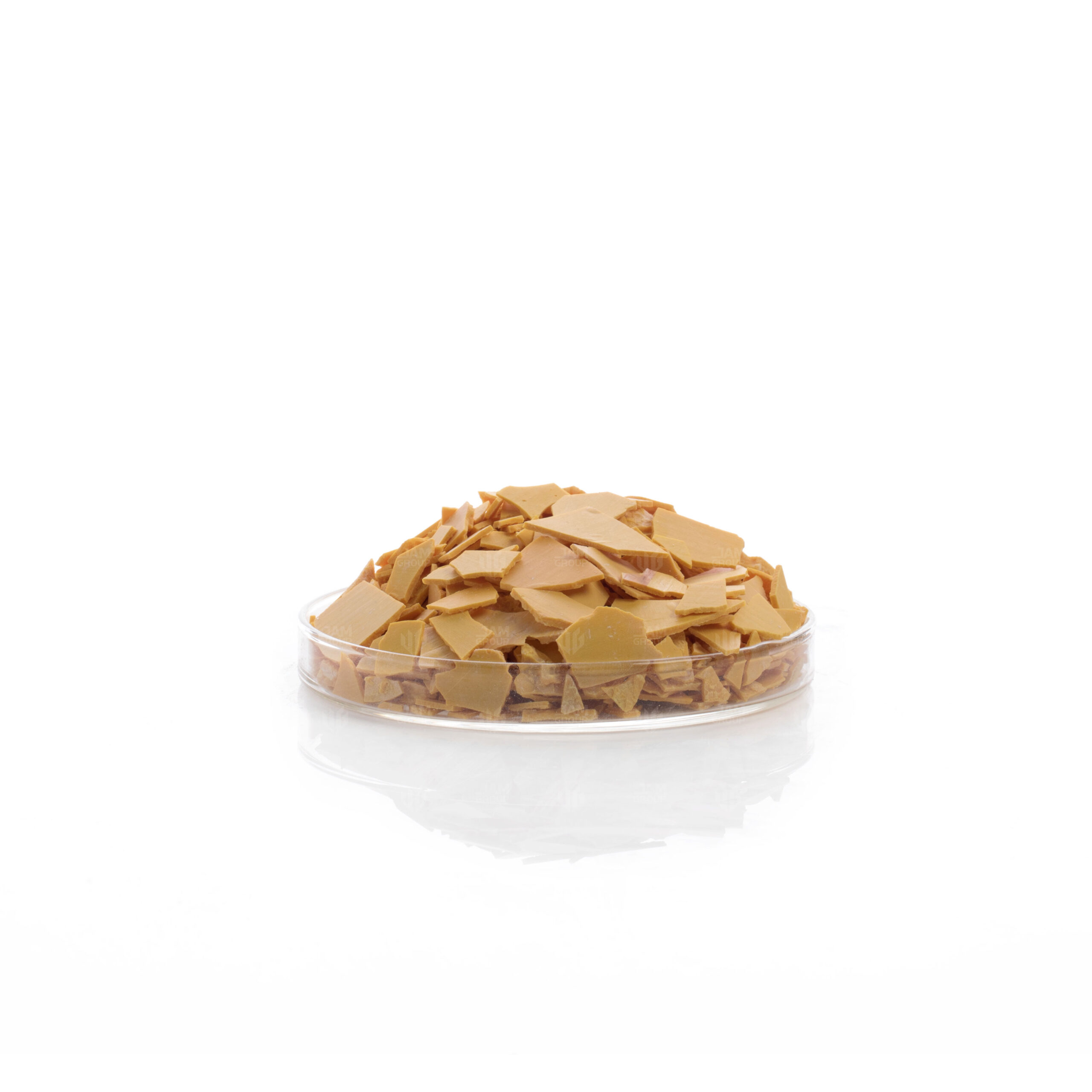

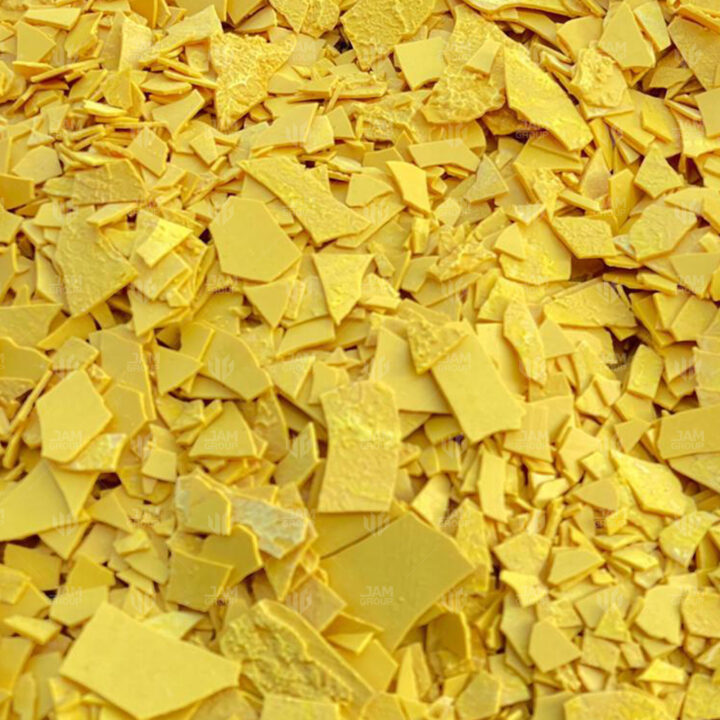
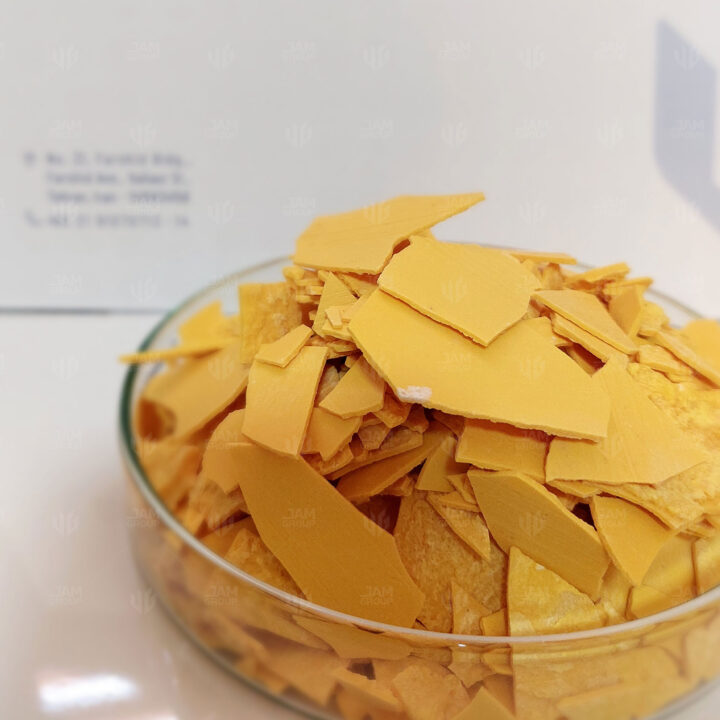
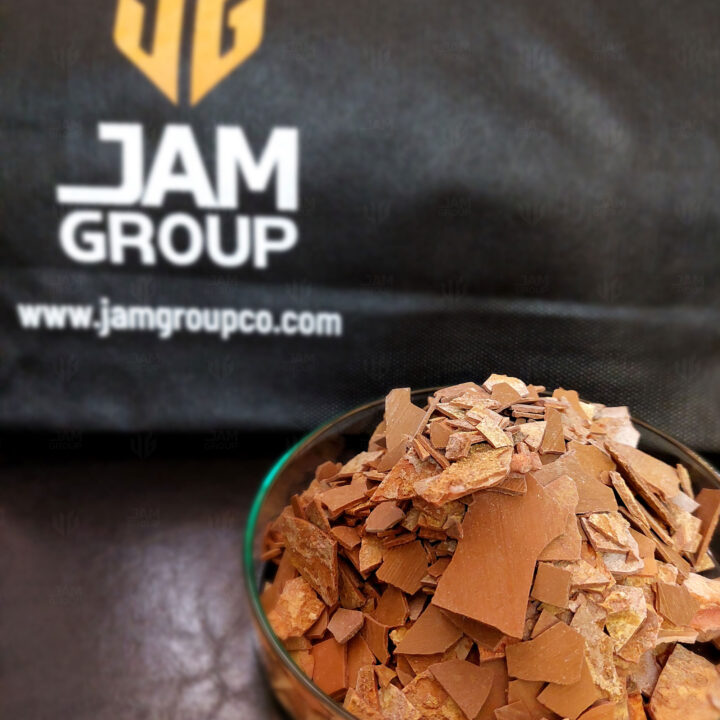
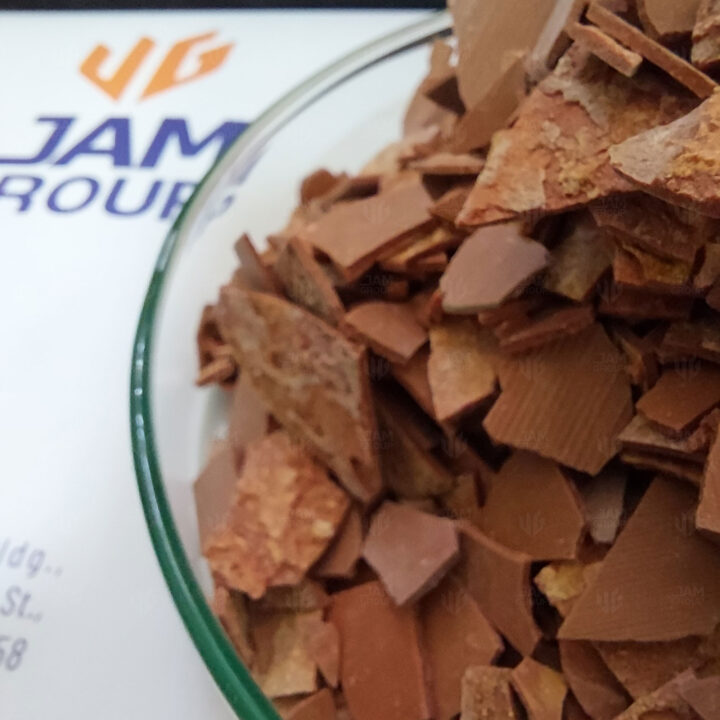
JAM Group Co. is a reliable supplier and provider of Sodium Sulphide 60% Red & Yellow Flake for industrial applications. Its published account of establishing a sodium sulphide flakes facility supports its manufacturing role. Buyers comparing a sodium sulfide 60% red flakes supplier should establish the offered material’s assay, iron limit, and suitability for their process. For JAM’s product range, these requirements provide a practical basis for purchase discussions without assuming that every colour or commercial specification has the same composition.
Removing hair from hides and preparing mineral surfaces for flotation require chemicals matched to the process. Sodium Sulphide 60% Red & Yellow Flake supplies sodium sulphide in a solid form used across these and other industrial operations. Its value depends on composition and suitability for the application, including any limits on iron contamination. This article explains the product’s identity, commercial quality specifications, production stages, and applications, alongside packaging considerations and the information buyers need when assessing a sodium sulphide international supplier or requesting a quotation.
What is Sodium Sulphide 60% Red & Yellow Flake?
Sodium sulphide is an inorganic compound; the sodium sulphide chemical formula is Na2S. The spellings “sulphide” and “sulfide” identify the same substance. The designation sodium sulphide CAS 1313-82-2 identifies the anhydrous compound, while hydrate identifiers include CAS 27610-45-3. This sodium sulphide industrial chemical dissolves in water and produces alkaline solutions. These properties support chemical processing applications but require careful handling: the material is corrosive, and acid contact can release toxic hydrogen sulphide gas. Buyers should consult the applicable sodium sulphide SDS.
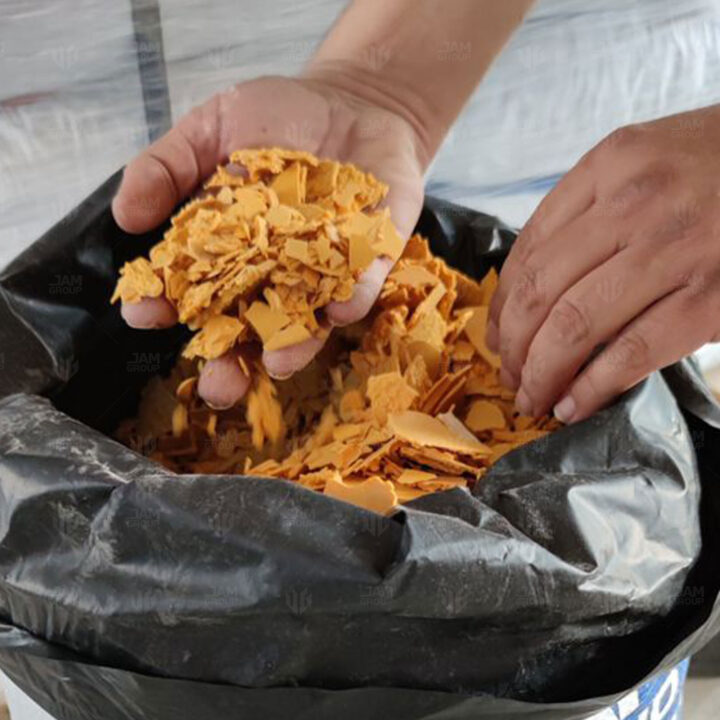
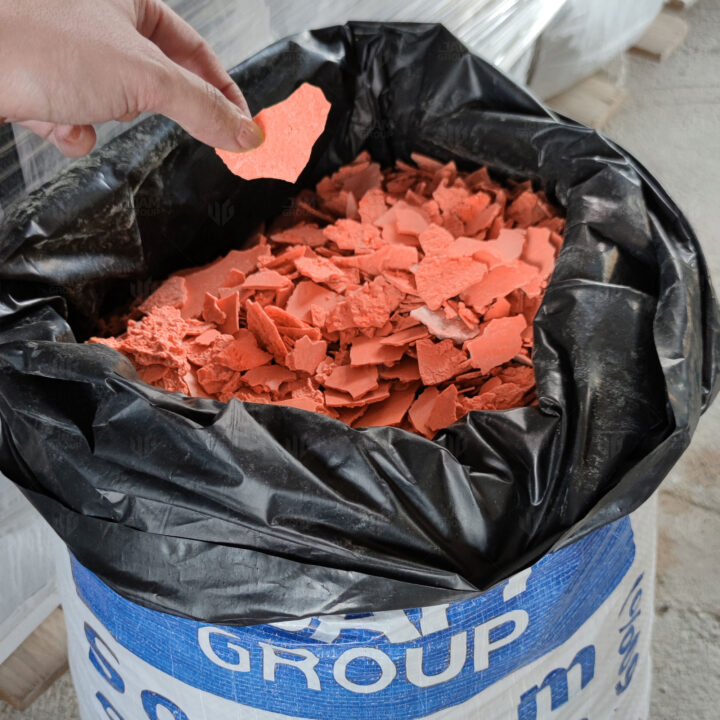
The 60% designation refers to sodium sulphide content by mass, expressed as Na2S. Commercial flakes are hydrated material, so the figure must be read alongside the specification and stated tolerances. Nouryon describes its yellow flakes as a hydrate containing 40% crystal water and specifies at least 60% Na2S; that description applies to its product. A sodium sulphide 60% red flakes supplier should identify the assay and impurity limits in its offer. Sodium sulphide specifications can differ between producers.
Different Grades of Sodium Sulphide 60% Red & Yellow Flake
Sodium sulphide 60% industrial grade is sold against commercial specifications that can differ between producers. Within this category, general technical material and material with tighter iron limits can be discussed as quality options, although these labels do not establish a universal grading system. Red and yellow describe appearance, flakes describe physical form, and 60% describes Na2S content. None of these features alone defines a standardized grade. A useful comparison therefore considers the declared assay, maximum iron content, and other impurities relevant to the buyer’s process.
Technical Grade for General Industrial Applications
Technical grade material is suitable for industrial operations whose impurity tolerances match the offered specification. Documented applications include use as a sodium sulphide leather chemical, sulfur dye manufacture, and mineral flotation, with selection depending on the process and the complete impurity profile. A buyer evaluating a sodium sulphide 60% red flakes supplier should check the stated limits rather than select material by colour alone. Published red flake specifications vary, so sodium sulfide specifications should identify acceptable iron content, water insolubles, and any other components that could affect the intended application.
When comparing a sodium sulfide 60% red flakes supplier with other sources, establish whether the declared limits are guaranteed maxima or typical analytical values. Request the test basis and check that the offered specification applies to the material being purchased. A sodium sulphide red flakes price is meaningful only alongside these requirements. The same applies to a sodium sulphide yellow flakes price: a lower quotation does not demonstrate equivalent composition or suitability. Buyers planning to buy sodium sulphide red flakes in bulk should compare like specifications.
Low-Iron Technical Grade for Iron-Sensitive Applications
Buyers selecting a low iron sodium sulphide supplier for textile processing need a declared maximum iron limit supported by analytical documentation. Nouryon specifies no more than 10 ppm iron for its yellow flakes, while DONGHONG lists yellow flakes below 30 ppm. These are individual commercial specifications. When assessing a sodium sulphide 60% yellow flakes supplier, buyers should compare the maximum permitted iron level together with assay and other impurities, and confirm that the offered material meets requirements.
Production Process of Sodium Sulphide 60% Red & Yellow Flake
A documented route to Sodium Sulphide 60% Red & Yellow Flake begins with the reduction of sodium sulphate using coal, followed by recovery and concentration of the resulting sodium sulphide. The sequence below describes this carbon-based route, including an optional purification step for tighter iron specifications. Gas-based reduction is a separate alternative with different reaction arrangements and is not combined with this sequence. These descriptions explain published industry methods; JAM Group Co.’s particular production route has not been verified.
Raw Material Selection and Preparation
Sodium sulphate provides the sodium and sulphur needed for this route, while coal supplies the carbonaceous reducing material. The feed materials are prepared and combined for furnace treatment. Their composition matters because mineral residues and metallic contaminants can enter the crude product and increase the purification required later. Raw material selection therefore affects both the reaction feed and the impurity burden carried into recovery. At this stage, the output is a prepared furnace feed, before conversion to sodium sulphide.
Thermal Reduction of Sodium Sulphate
In the furnace, the prepared feed undergoes thermal reduction, converting sodium sulphate into sodium sulphide. The carbonaceous material acts as the reducing agent, and the furnace product contains sodium sulphide alongside residual coal, ash, and other inorganic compounds. Reaction conditions influence conversion and the formation of unwanted components, including carbonate and oxidized sulphur compounds. The resulting crude material requires further processing before it becomes a specified commercial product. Its composition also determines the demands placed on the subsequent recovery stages.
Water Leaching and Clarification
The crude furnace product is contacted with water to recover its soluble sodium sulphide content. This produces an alkaline liquor containing dissolved salts and suspended material. Clarification separates insoluble residues, such as ash and unreacted carbon, from the liquid intended for further processing. Soluble impurities can remain in the liquor, so clarification alone does not establish the final chemical specification. The outputs are a clarified sodium sulphide solution and a separated residue stream, which require appropriate handling within the production system.
Iron Removal for Low-Iron Specifications
Where the target specification requires additional iron control, the clarified liquor undergoes a further purification treatment. One documented method uses a flocculant to bring fine iron sulphide particles together so they can be removed by filtration. This produces liquor with a reduced iron burden for subsequent concentration. The treatment is an example of a low-iron process variant, rather than a compulsory step for all technical material. Its effectiveness must be established analytically against the intended maximum iron limit for the finished product.
Evaporation and Concentration
The clarified or additionally purified liquor is concentrated by evaporation, which removes water and increases the proportion of sodium sulphide in the remaining liquid. This prepares the material for solidification at the intended commercial composition. The concentration target must account for the water retained in the hydrated product and the dissolved impurities that remain after purification. Evaporation is a concentration step, so the final assay depends on the incoming liquor as well as the amount of water removed during processing.
Cooling and Drum Flaking
The concentrated material is cooled on a drum flaker, where solidification produces a layer that is removed as flakes. This stage changes the physical form of the concentrated product and provides material for subsequent handling. Flaking itself does not remove dissolved impurities, so the finished composition reflects the preceding reaction, separation, and concentration stages. Product assessment should therefore cover the Na2S assay and relevant impurity limits as well as appearance. A red or yellow colour alone cannot establish conformity with a purchase specification.
Packaging Sodium Sulphide 60% Red & Yellow Flake at JAM Group Co.
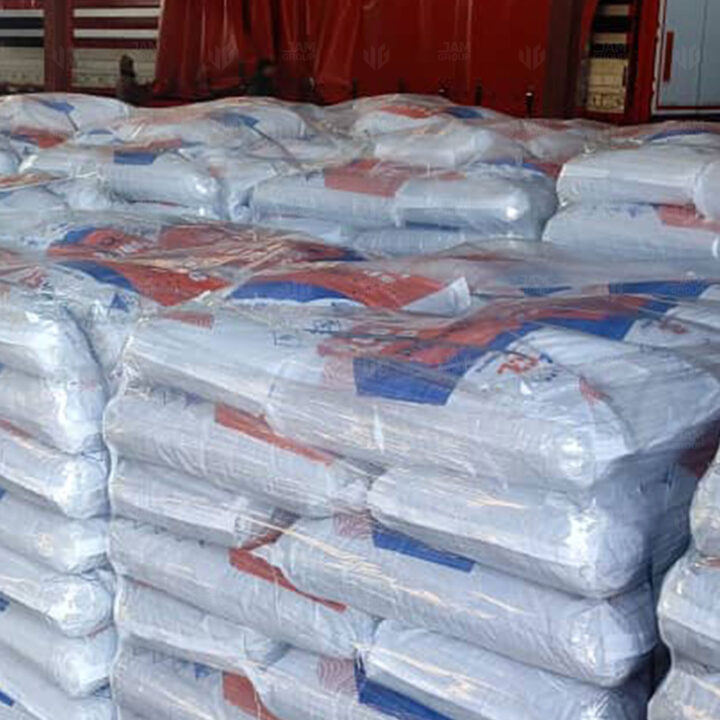
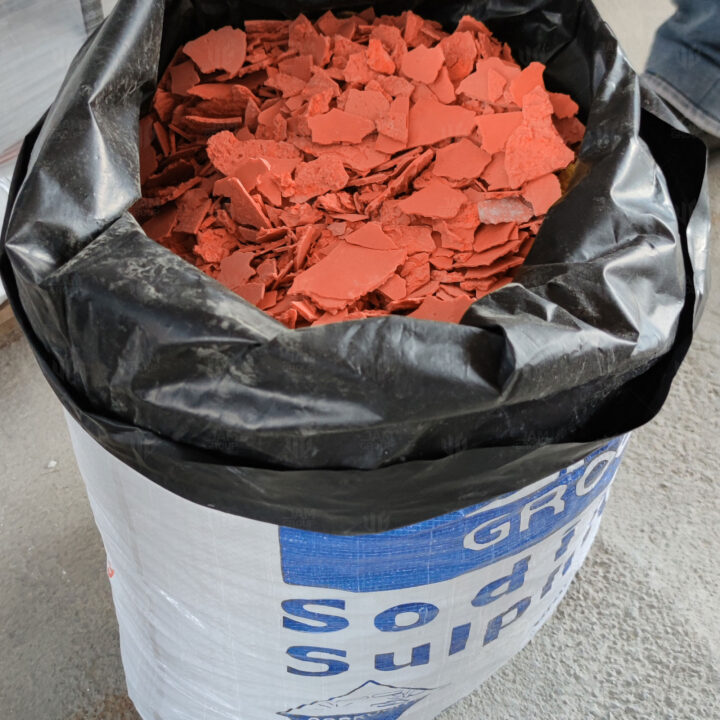
Packaging for Sodium Sulphide 60% Red & Yellow Flake must protect the material from moisture and contamination during handling, storage, and transit. Damaged closures or punctures can expose flakes and complicate unloading. Buyers selecting a sodium sulphide 60% red and yellow flakes supplier should establish package protection alongside sodium sulfide technical data. As a reliable supplier and provider, JAM Group Co. is a commercial contact for these discussions. An order should identify the agreed format and its compatibility with the buyer’s receiving equipment and storage conditions.
- Bulk packaging formats:
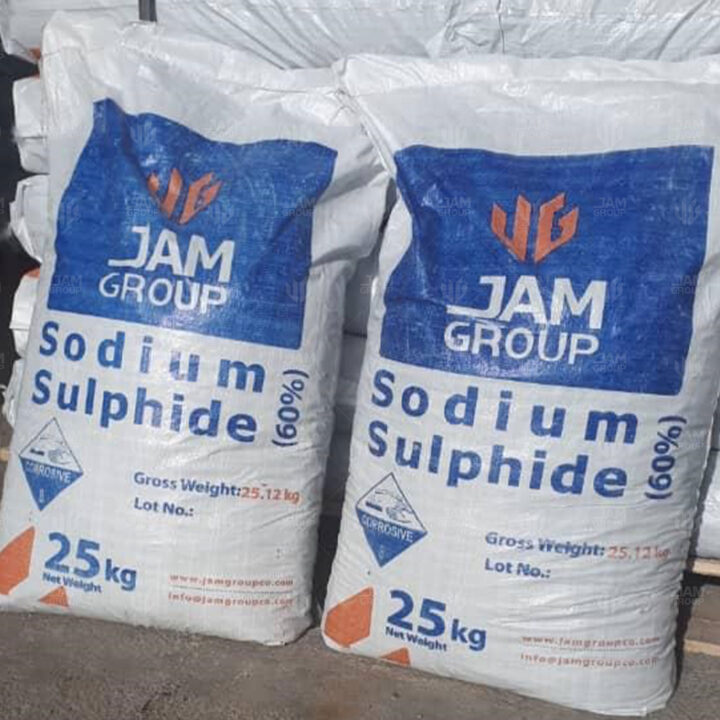
Industrial sodium sulfide packaging commonly includes bags, with producer literature documenting polyethylene bags for commercial flakes. Larger flexible containers require confirmation of suitability for the product and transport conditions. Sodium sulphide bulk packaging should be assessed against unloading equipment, dispensing frequency, and exposure after opening. A documented industry example is a sodium sulphide 25 kg bag. Buyers assessing a sodium sulphide 60% yellow flakes supplier should confirm the available format and weight for their order, including any offer from JAM Group Co.
- Preservation and sealing:
Closures should limit moisture ingress and exposure to air, which can alter sodium sulphide during storage. Packages should remain closed when not in use and be kept in a dry location, protected from direct sunlight and incompatible chemicals. Separation from acids is especially important because acid contact can release toxic hydrogen sulphide. These controls concern the chemical’s stability and reactivity. Buyers should request the sodium sulfide SDS from the sodium sulfide chemical supplier and inspect package condition; a closure alone cannot guarantee safe storage.
- Retail-ready and private-label formats:
Consumer retail formats have limited relevance to an industrial chemical that requires hazard communication and controlled handling. For a sodium sulphide wholesale supplier considering smaller resale units or distributor branding, the useful questions concern chemical identification, declared composition, batch traceability, and the information needed on the package. Any change in pack size should preserve suitable containment and handling instructions. Buyers should establish who is responsible for labelling and documentation, and confirm whether the requested format is available. JAM’s availability for such requests requires confirmation.
- Palletization and export handling:
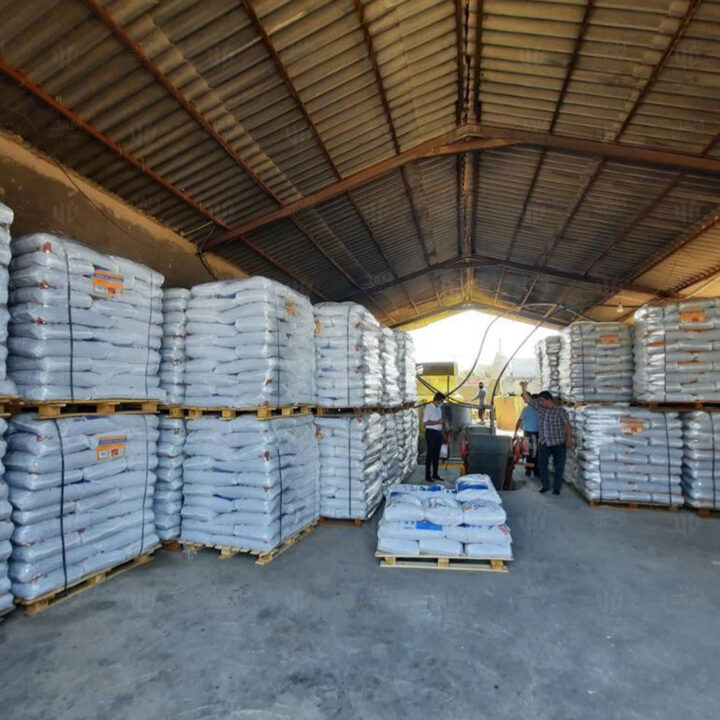
Where palletized bags are selected, load planning should account for package dimensions, stacking stability, lifting access, and protection against punctures or crushing. Transit arrangements should also protect the load from wet conditions and avoid contact with incompatible cargo. Buyers evaluating a sodium sulphide 60% exporter need to confirm the offered product’s transport classification and the packaging requirements that apply to the journey. Published documentation for hydrated flakes identifies UN 1849, but the shipment’s actual classification must follow its composition and applicable transport documentation for sodium sulphide bulk export.
About JAM Group Co.’s Sodium Sulphide 60% Red & Yellow Flake
JAM Group Co.’s published product range includes Sodium Sulphide 60% Red & Yellow Flake, with published information describing yellow flakes for industrial uses. Buyers assessing a sodium sulphide 60% red flakes supplier should identify the application clearly, allowing the offered material to be assessed against the buyer’s specification. Catalogue descriptions should be checked against the terms of the particular order. Current analytical documentation should define the composition being purchased, especially when an application requires a specific maximum iron content.
JAM Group Co. as a Manufacturer of Sodium Sulphide 60% Red & Yellow Flake
JAM Group Co. states that it opened a sodium sulphide flakes manufacturing facility in 2020, intended to serve mineral-processing and leather-tanning applications. This published company information supports describing JAM as a sodium sulphide manufacturer within this product family. Buyers seeking to buy sodium sulphide yellow flakes in bulk should establish the production source and applicable specification. The manufacturing role provides context for that discussion; a sodium sulfide manufacturer should be assessed against agreed requirements and supporting documentation.
JAM Group Co.: A Reliable Supplier of Sodium Sulphide 60% Red & Yellow Flake
A useful sodium sulphide quotation should state the sodium sulphide bulk price against a defined specification. When evaluating a sodium sulphide 60% red and yellow flakes supplier, purchasers should identify the quantity, delivery destination, required packaging, and terms to be priced. These are relevant enquiries for JAM Group Co. or another sodium sulfide wholesale supplier. Buyers planning to buy sodium sulfide 60% in bulk should clarify acceptance documents and conformity assessment, with availability and commercial commitments established through the agreed order terms.
Applications of Sodium Sulphide 60% Red & Yellow Flake
Sodium Sulphide for Leather Industry Applications: Hide Dehairing
Using sodium sulphide for hide dehairing relies on its ability to break disulphide bonds in keratin, the protein that gives hair its resistance to breakdown. In alkaline unhairing systems, this action helps destroy or loosen hair for removal from hides and skins before tanning. A sodium sulphide leather tanning chemical performs this preparation function before tanning agents are applied. Purchasing sodium sulphide for tannery operations requires a matching specification, including impurity limits and management of sulphide-bearing effluent.
Sodium Sulphide for Dyeing: Sulfur Dye Manufacture and Textile Processing
The use of sodium sulphide for sulfur dyes includes both dye manufacture and preparation for application to fabric. In dyeing, a sodium sulphide reducing agent converts suitable insoluble sulfur dyes into a soluble form that can enter the fibre. Subsequent oxidation restores the insoluble dye within the material. This explains the use of sodium sulfide for dyeing without implying suitability for every dye class. Selecting sodium sulphide for textile industry applications depends on dye formulation, reducing strength, and impurities, including iron where the process specification controls it.
Kraft Pulp and Paper Production
The use of sodium sulphide for paper industry operations includes kraft pulping, where it contributes to the alkaline cooking liquor used to separate cellulose fibres from lignin in wood. Dissolved sulphide supplies reactive species that assist delignification alongside sodium hydroxide. Commercial flakes used as a sodium sulfide pulp and paper chemical must meet the mill’s specification. Kraft mills recover cooking chemicals internally, which affects their need to purchase sodium sulfide for pulp and paper and should be considered when assessing demand for commercial flakes.
Sodium Sulfide for Copper Flotation and Surface Sulfidization
The use of sodium sulphide for copper flotation can involve treating oxidized copper minerals such as malachite before adding a collector. Dissolved sulphide reacts with the mineral to form copper sulphide species at its surface, improving the conditions for collector attachment. This is the function of a sodium sulphide sulfidizing agent within an appropriate reagent scheme. Performance depends on mineralogy and reagent conditions; sodium sulphide for copper ore processing is not a universal collector, and laboratory evidence does not establish identical results for every commercial grade.
Sodium Sulfide for Lead Flotation and Zinc Ore Processing
For ores containing oxidized lead and zinc minerals, sodium sulphide can support surface sulfidization within a staged flotation scheme. Its soluble sulphide species modify the mineral surface before treatment with suitable collectors. Research on mixed oxide–sulfide ore demonstrates why sodium sulphide for lead zinc ore processing must be assessed against the actual mineral assemblage and separation sequence. Using sodium sulphide for lead flotation and sodium sulphide for zinc flotation can require different reagent combinations. Studies using laboratory hydrates do not guarantee equivalent performance from commercial flakes.
Sodium Sulfide for Sulfide Ore Flotation and Reagent Control
In sulfide mineral circuits, a sodium sulphide flotation reagent can change flotation behaviour through effects beyond the surface sulfidization used for oxide minerals. Experimental work with chalcopyrite and galena shows that it can reduce the adsorption of a xanthate collector and depress mineral recovery under the tested conditions. This gives sodium sulphide for sulfide ore flotation a distinct role in reagent control and selective separation. Selecting sodium sulfide for ore flotation depends on the mineral and chemical environment, so its addition should not be described as an automatic recovery improvement.
Sodium Sulfide for Water Treatment and Metal Precipitation
The use of sodium sulphide for wastewater treatment centres on supplying sulphide that reacts with dissolved metals to form poorly soluble metal sulphides. These solids can then be separated from the water. In sodium sulfide wastewater treatment, reagent solubility enables reaction; the resulting compounds’ low solubility enables removal. Performance varies with the metals present, complexing substances, pH, and dose. Selecting sodium sulphide for water treatment requires testing, separation arrangements, and controls for residual sulphide and gas release.
Sodium Sulfide for Rubber Chemicals and Chemical Intermediates
As a sodium sulphide chemical raw material, the product supplies reactive sulphide for manufacturing other sulphur-containing compounds. Documented products include sodium polysulphides, which have a separate role in polysulphide rubber manufacture. In that production chain, sodium sulphide is a precursor to the polysulphide reagent used to build the polymer. This explains one use of sodium sulphide for rubber chemicals within a defined synthesis route. Sodium sulphide technical data should establish assay and impurities against the downstream reaction’s specification.
○What does the 60% specification mean?


A 60% specification expresses the sodium sulphide content as Na2S by mass. For a one-tonne lot meeting exactly 60%, this corresponds to 600 kg of Na2S equivalent in the hydrated material. A sodium sulfide 60% supplier should state whether 60% is a guaranteed minimum, a nominal value, or an agreed range. This matters when assessing a sodium sulfide price. Comparing a sodium sulphide 60% price per ton requires the same assay basis, because equal package weights do not necessarily provide equal amounts of active sodium sulphide.
○How do red and yellow sodium sulphide flakes differ?
Red and yellow flakes describe appearance rather than fixed impurity limits. DONGHONG, for example, publishes a red-flake iron limit below 90 ppm, while another commercial red-flake specification permits up to 1,500 ppm. Those figures belong to the respective offers, not a universal colour classification. When comparing a sodium sulfide 60% red flakes supplier with a sodium sulfide yellow flakes supplier, assess the complete specification and the application’s requirements. A change of colour alone does not establish whether substitution is acceptable.
○What should buyers check when specifying an iron limit?
An iron limit should state the maximum permitted concentration and its measurement basis. For solids reported by mass, 30 ppm means 30 mg of iron per kilogram; it does not describe Na2S assay. A buyer assessing a sodium sulphide 60% yellow flakes supplier should distinguish a guaranteed maximum from typical or batch results. Limits such as 30, 80, 150, or 1,500 ppm are commercial specifications, not standardized grades. The required limit should follow the application and be confirmed for the offer.
○How should sodium sulphide flakes be packaged and stored?
Sodium sulphide packaging should remain securely closed under the storage conditions specified for the supplied product. Moisture exposure can alter the material, while contact with acids can release toxic hydrogen sulphide. Packages should be checked for damage before storage and protected during handling. Industry examples of sodium sulfide bulk packaging require dry storage and protection from direct sunlight. Buyers should obtain the applicable sodium sulphide SDS and clarify instructions for opened packages, because a general storage recommendation does not establish a universal shelf life or guarantee stability after opening.
○What information is needed for a bulk sodium sulphide quotation?
A sodium sulphide RFQ should specify Na2S assay, maximum iron, colour, quantity, and application. When evaluating a sodium sulphide 60% red and yellow flakes supplier, include pack size, destination, and commercial terms. For a sodium sulphide price per ton, clarify whether “ton” means a metric tonne and which delivery costs are included. Buyers seeking to buy sodium sulphide 60% in bulk should identify acceptance documents and ask how long quoted terms remain valid. A sodium sulphide bulk supplier needs these details to prepare a comparable offer.
HOW CAN JAM GROUP HELP YOU?
Send us a message and our friendly team will get back to you within one business day.


