













Liquid Sodium Silicate Uses
Liquid sodium silicate doesn’t just sit on a lab shelf; it shows up in cleaners under your sink, corrugated boxes, concrete floors, foundry molds, even drilling muds. Its punch comes from strong alkalinity plus dissolved silica that can later harden into a glassy network; great for cleaning, binding, sealing, and stabilizing. In the following article, we explain what liquid sodium silicate is, why industries rely on it, and how to choose a grade that actually fits your process. We also cover handling and safety, because smart chemistry only helps when it’s used with care and clear operating limits.
Innovation needs dependable supply. As demand grows for higher performance with lower VOCs, liquid sodium silicate keeps earning space in modern formulations. JAM Group Co. is a reliable supplier of sodium silicate across various grades (especially the liquid form) supported by technical guidance on modulus, solids, and viscosity so buyers match chemistry to application. Below, you’ll find a practical tour of liquid sodium silicate uses, organized by real-world workflows, followed by grade-selection tips and safety notes that make implementation smoother for production teams and specifiers.
Sodium Silicate: What Is It?
Sodium silicate is the general name for a family of inorganic materials made from sodium oxide (Na₂O) and silica (SiO₂). Depending on the SiO₂:Na₂O ratio (called the “modulus”) it appears as a glassy solid, a dissolvable powder, or an aqueous solution known as water glass. Its behavior is defined by strong alkalinity and the ability to form silica networks that harden or bond to porous surfaces. These traits explain why it shows up in cleaners, paper adhesives, foundry binders, and cement-related treatments, where controlled setting, bonding, and chemical resistance are required.
- Composition/modulus:
Performance varies with the SiO₂:Na₂O ratio.
- Alkalinity:
Typically high pH (≈11–12) in solution, enabling cleaning and dispersion.
- Solubility & viscosity:
More silica raises viscosity and lowers free alkalinity.
- Reactivity:
Forms silica gel; with calcium hydroxide it yields C-S-H in cementitious systems.
- Adhesion:
Bonds well to porous substrates like paper, wood, and mineral surfaces.
- Thermal/chemical traits:
Nonflammable, inorganic, and low-VOC, but caustic; PPE is required.
What Is Liquid Sodium Silicate?
Liquid sodium silicate is an aqueous solution of sodium silicate with a controlled modulus, commonly in the range used for detergents, adhesive formulations, and mineral treatments. In this form, it offers predictable viscosity, easy metering, and rapid mixing in industrial processes. The high pH provides alkalinity for cleaning, dispersion, and stabilization, while the dissolved silicate can later form a hard silica matrix when neutralized or reacted. Because the composition is tuned at the factory, plants get consistent behavior across batches, which is essential for repeatable product quality and process control.
Compared with other grades, liquids arrive ready to use, unlike solid glass or powders that must be dissolved and aged for stability. Versus sodium metasilicate pentahydrate (a common powdered builder), liquids deliver smoother dosing in continuous systems. Potassium silicate liquids provide similar chemistry but different film hardness and water resistance. Colloidal silica is another fluid silica source, yet it contains no alkali; it behaves as dispersed silica particles rather than an alkaline silicate solution, so its pH, reactivity, and end uses differ.
What Are Liquid Sodium Silicate Uses?
Liquid sodium silicate is used where you want high pH for cleaning or dispersion, and a silica backbone that can later harden, bind, or densify. In broad strokes, it powers detergents and surface cleaners; bonds paper and porous substrates; densifies and seals concrete; helps with iron/manganese sequestration in water treatment; binds sand in foundry cores; stabilizes reactive shales in drilling fluids; acts as a deflocculant in ceramic slips; and serves as a precursor for silica gel and zeolites. In the following sections, we explain each application, the role sodium silicate plays, and the considerations that matter during production.
First Application: Detergents & Cleaners
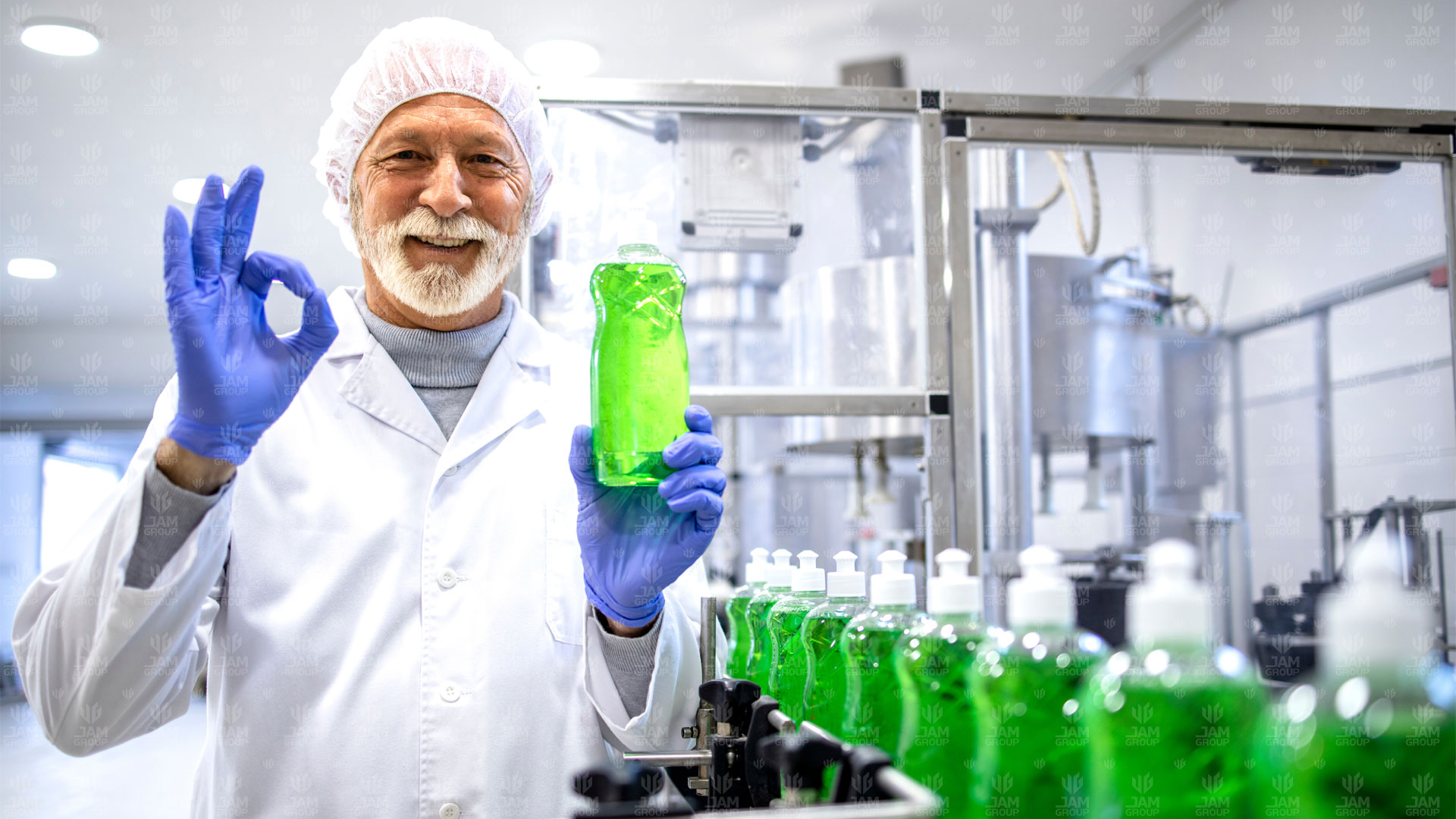
In home care and institutional cleaning, liquid sodium silicate acts as a builder: it boosts alkalinity, helps saponify fats, disperses soils, and stabilizes oxidizing bleaches. Its buffering action holds pH in a range where surfactants perform reliably and enzymes suffer less from acid drift. Because it is inorganic and low-VOC, it aligns with many regulatory frameworks and plant safety goals. Process-wise, liquids are easy to meter inline, blend quickly, and avoid the dissolution and aging steps that powdered silicates require. The result is tighter batch-to-batch control, less equipment fouling, and cleaning systems that rinse cleaner with fewer residues.
Second Application: Paper & Adhesives
Paper converters lean on sodium silicate as a low-cost, water-based adhesive for corrugating and laminating. The chemistry wets porous fibers, then sets by water loss and silica network formation, producing fast “green” strength with excellent heat resistance. In box plants, liquid grades simplify dosing, allow on-machine viscosity control, and enable quick changeovers between flute profiles. Beyond corrugated board, silicate adhesives bond mineral wool, fiberglass, and some wood composites where solvent systems are restricted. Careful balance of modulus and solids helps you tune tack, pot life, and final film hardness, while additives (like borates) can push set speed or moisture resistance.
Third Application: Construction (Concrete Densifiers, Sealers & Grouts)
When applied to concrete, liquid sodium silicate penetrates the pore network and reacts with portlandite [Ca(OH)₂] to form additional C-S-H gel, which is the same binder that gives concrete its strength. This reaction tightens the surface, reduces dusting, and improves abrasion resistance. In grouts and soil stabilization, silicate solutions can be combined with reactants to form rapid, mineral-based set systems. They’re also used in mineral paints and masonry treatments where breathable, inorganic finishes are preferred. Selecting viscosity and modulus to match substrate porosity and temperature ensures deeper penetration, uniform densification, and fewer unwanted surface glassy films.
Fourth Application: Water Treatment
Utilities and industrial plants use sodium silicate for iron and manganese sequestration, helping keep these metals in solution and reducing discoloration or deposition downstream. Formulators may also include it in corrosion-control programs, where it supports passivation in certain pipe materials. Because water chemistry varies, operators dial in dosage, pH, and co-treatments (such as orthophosphate) to hit performance targets while meeting local regulations. The liquid form is easy to store and meter into distribution systems, and its buffering capacity helps stabilize treatment conditions. Pilot trials and ongoing monitoring are essential to confirm compatibility with source water and infrastructure.
Fifth Application: Foundry & Refractories
Foundries value sodium silicate as a sand-bonding system for cores and molds. Mixed with sand and set with carbon dioxide or organic esters, it yields high early strength, dimensional accuracy, and low odor versus some organic binders. Because the final matrix is inorganic, parts show good hot strength and lower smoke during pour. In refractories, silicate binders help formulate fire-resistant mortars and coatings for insulating bricks and castables. Liquid grades streamline sand coating, enable tight control of binder percentage, and reduce dust exposure on the shop floor. Shakeout and reclamation plans should consider the cured silicate’s toughness.
Sixth Application: Drilling Fluids & Wellbore Stabilization
In water-based drilling fluids, sodium silicate helps stabilize reactive shales and clay-rich formations. The alkaline silicate reduces swelling and sloughing by inhibiting clay hydration and forming a thin, mineralizing film on exposed faces. It also contributes to fluid alkalinity, supporting mud treatments that prefer higher pH. Liquid supply makes rig dosing straightforward and supports real-time adjustments as lithology changes. Successful programs keep silicate within a defined concentration window, monitor rheology, and watch for cation levels that might shift inhibition performance. The goal is safer penetration rates, cleaner hole conditions, and fewer non-productive time events.
Seventh Application: Ceramics & Slip Casting (Deflocculant)
Ceramic studios and tile producers use sodium silicate as a deflocculant in clay slips. Small additions reduce interparticle attraction, lower viscosity, and cut the water demand for a given fluidity. That means faster casting, less shrinkage on drying, and improved green strength. In production, sodium silicate often pairs with soda ash to fine-tune pH and dispersion. Because every body formulation behaves differently, teams run line trials to find the minimum dose that achieves flow without over-deflocculation (which can cause sedimentation or poor casting edges). Liquid dosing ensures consistent mixing and fewer batch-to-batch surprises.
Eighth Application: Silica Gel & Zeolite/Catalyst Manufacturing
Liquid sodium silicate is a convenient silica source for producing silica gel, precipitated silicas, and aluminosilicate zeolites. Controlled neutralization or hydrothermal synthesis converts dissolved silicate into targeted pore structures and surface areas. In catalyst manufacture, silicate-derived supports offer high surface area and thermal stability, while precipitated silicas tune rheology in coatings, rubber, and toothpaste. Liquids simplify reactor charging, accelerate dissolution kinetics, and reduce undissolved grit that can seed defects. Process engineers focus on pH, temperature, mix order, and aging time to achieve consistent particle size distributions and performance properties at commercial scale.
Ninth Application: Automotive/Repair (Niche)
A smaller but persistent niche uses sodium silicate as a temporary sealer in automotive repair—most commonly for head-gasket leak sealants and exhaust/muffler patching. Under heat, the silicate forms a brittle, glass-like plug that can slow weeping leaks long enough to reach a workshop. It’s also used in certain radiator “liquid glass” treatments, though results are highly situational and not a substitute for mechanical repair. If employed, follow product directions carefully, flush systems afterward if specified, and treat the fix as a stopgap. The same heat-setting trait also appears in some high-temperature gasket coatings and stove-cement formulas.
Is Liquid Sodium Silicate the Right Grade for You?
Choosing the right grade starts with your process: how you add it, what it must do, and how fast it should react. Grades are defined by modulus (SiO₂:Na₂O ratio), solids content, and viscosity. Lower modulus offers higher free alkalinity for cleaning and dispersion; higher modulus leans toward stronger silica networks for films, densifiers, and binders. Liquids remove the need for dissolving and aging solids, saving time and reducing variability. Match penetration depth (construction), set speed (foundry/adhesives), and compatibility (water treatment/drilling) before locking in a spec or placing a purchase order.
- Start with function:
Builder, binder, densifier, deflocculant, or silica precursor.
- Pick modulus:
Lower for cleaning/buffering; higher for films and binding.
- Set solids/viscosity:
Align with dosing pumps, spray equipment, or penetration needs.
- Check interactions:
pH compatibility, salts, surfactants, fibers, cement chemistry.
- Validate in trials:
Define dose windows, cure schedules, and QC tests for scale-up.
Source reliability:
Work with suppliers (e.g., JAM Group Co.) who provide consistent batches, COAs, and technical support.
Handling & Safety Notes Regarding Liquid sodium silicate
Liquid sodium silicate solutions are strongly alkaline and can irritate skin and eyes. Store in compatible containers (HDPE or lined tanks), protect from contamination, and keep sealed to avoid carbonation that can thicken or skin the product. When mixing, add silicate to water where possible, and never slam it into acids; neutralization should be controlled and ventilated. For spills, contain, dilute carefully, and follow local regulations for cleanup and disposal. Train teams on eyewash and shower locations, and document SOPs for transfer lines, pumps, and filtration.
- PPE:
Chemical-resistant gloves, goggles/face shield, protective clothing.
- Ventilation:
Especially during neutralization or high-temperature operations.
- Temperature:
Avoid freezing; protect from prolonged heat that shifts viscosity.
- Compatibility:
Segregate from strong acids and ammonium salts unless process-controlled.
- First aid:
Immediate water rinse for eyes/skin; seek medical attention as needed.
- Documentation:
Maintain up-to-date SDS, COA/TDS, and batch records for audits and traceability.
HOW CAN JAM GROUP HELP YOU?
Send us a message and our friendly team will get back to you within one business day.